
In Search of Ann Reeves Jarvis: The Woman Who Believed Compassion Could Heal a Divided Nation
On the outskirts of Grafton, West Virginia, at 284 Pearl Felton Lane, sits an unassuming white frame house that has found its place in history as the house of Ann Reeves Jarvis, and the birthplace of Anna Jarvis - the founder, and creator of Mother’s Day. This tiny house is now a museum dedicated to Anna Jarvis, and the entire Jarvis family. But the museum, the house, and the land surrounding it, is steeped in Civil War history, early Civil Rights, the Underground Railroad, and a history of acceptance, and human rights.
February 8, 2019
Most people know Mother’s Day as a celebration of flowers, cards, and family. Few know that its roots began in a small West Virginia farmhouse with a woman who believed compassion should extend beyond battle lines, political divisions, and social boundaries.
On the outskirts of Grafton, West Virginia, at 284 Pearl Felton Lane, sits an unassuming white frame house that quietly holds one of America’s most remarkable stories. This was the home of Ann Reeves Jarvis—the woman whose life and work inspired her daughter, Anna Jarvis, to create Mother’s Day.
Today, the house is a museum dedicated to the Jarvis family. But the story contained within these walls reaches far beyond the creation of a holiday. It is a story of the Civil War, women’s leadership, early public health, the Underground Railroad, and a lifelong commitment to compassion and human dignity.
Ann Reeves Jarvis was an activist long before Mother’s Day existed. In 1858, while pregnant with her sixth child, she created what became known as the Mother’s Day Work Clubs. These grassroots organizations were formed to improve health and sanitary conditions throughout Taylor County, West Virginia, at a time when disease was one of the leading causes of infant mortality.
The clubs provided education and assistance to families, raised money to purchase medicine, and hired women to help expectant mothers experiencing health problems. Their mission was simple: to reduce suffering and improve the lives of those around them.
When the Civil War began, Ann Reeves Jarvis found herself living in a divided nation. Although she lived in Union territory, she refused to take sides in the conflict. Instead, she urged the Mother’s Day Work Clubs to remain neutral and continue serving those in need—regardless of which uniform they wore.
The Jarvis home stood on land that had been part of one of the largest Union encampments in West Virginia during the war. Union officers used the house for strategic planning, yet within those same walls Ann maintained her belief that compassion should not be limited by political allegiance.
When the Methodist Church considered dividing into northern and southern branches, Ann—a deeply committed Methodist—refused to support the separation. She believed faith and humanity should transcend political divisions.
As the war continued, the mission of the Mother’s Day Work Clubs evolved. Under Ann’s leadership, the clubs provided food, clothing, and assistance to soldiers from both sides of the conflict.
Near the end of the war, the Jarvis family moved several miles away to Grafton, West Virginia. There, Ann continued her work within the Methodist Church and oversaw the construction of Andrews Methodist Episcopal Church, where she taught Sunday School and became known as a respected public speaker.
According to the recollections of her daughter, Anna Jarvis, it was during a Sunday School lesson in 1876 that Ann Reeves Jarvis prayed for someone to create a day honoring mothers.
After her mother’s death, Anna carried that vision forward. In May 1907, she organized a private memorial service honoring her mother. A year later, in 1908, she organized the first official observance of Mother’s Day at Andrews Methodist Episcopal Church in Grafton.
After years of advocacy, Anna Jarvis succeeded in having Mother’s Day recognized as a national holiday. In 1914, President Woodrow Wilson signed a congressional resolution declaring the second Sunday in May as Mother’s Day and called upon Americans to honor the day by displaying the American flag.
Today, Andrews Methodist Episcopal Church still stands along Main Street in Grafton. It is now recognized as the official Mother’s Day Shrine.
The Anna Reeves Jarvis House offers another window into this remarkable family’s history. A guided tour begins in the kitchen, where beneath a large rope rug is a small door in the floor. According to the museum’s interpretation, this hidden crawlspace was used during the era of slavery as a place of refuge for those seeking freedom through the Underground Railroad.

A crawl Space, hidden beneath the rope rug that covers a large portion of the kitchen floor, in the Anna Reaves Jarvis house.
Throughout the house, artifacts and documents tell the story of the Jarvis family and the world they inhabited. Relics from the Civil War reveal the challenges faced by families living through one of the most divided periods in American history.

Photographs of Union soldiers occupy a section of tis original desk in the Ann Reeves Jarvis house. Also ration tickets, and a newspaper headline adorn the desk.
But perhaps the most unexpected and moving room is found on the second floor.
There, a collection of dolls fills a small room.
These dolls were not owned by the Jarvis family, but each one carries a story. Over the years, curator Olive Ricketts began receiving dolls from people around the world. Some arrived in person. Others came through the mail with handwritten notes attached.
Many were donated after their original owners had passed away, given to the Jarvis House so they would have a meaningful place to continue their lives.
Each doll represents a mother.
Together, they represent the continuing legacy of Ann Reeves Jarvis and Anna Jarvis—the belief that mothers, families, and human connections deserve to be remembered and honored.
A small piece of paper attached to one quilt acknowledges the person who donated it.
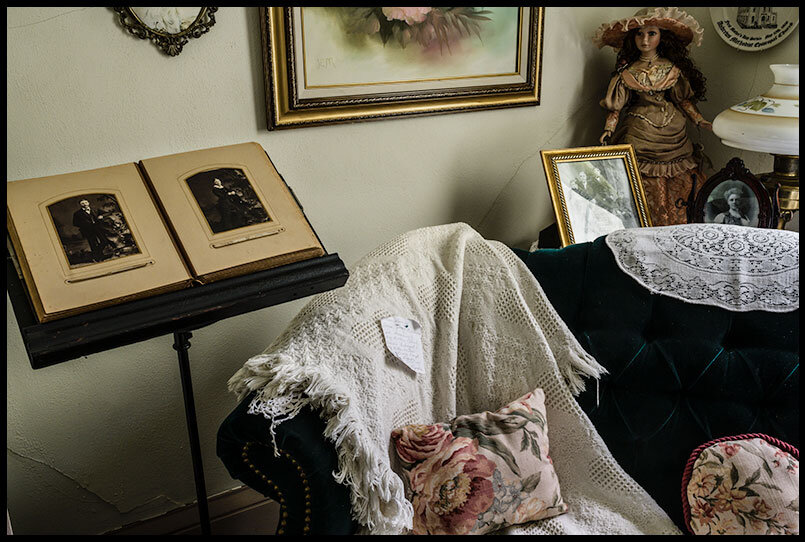
A piece of paper, attached to the quilt, gives an acknowledgement to the person who donated it.
It is a simple gesture, but perhaps that is what makes it so meaningful.
Behind every object is a person.
Behind every person is a story.
And that, ultimately, is the true legacy of Mother’s Day.